
While wireless can support many of these connections, it can also be limiting because the devices also require power. 4-pair Ethernet offers the right technical performance, but can be too large and bulky for building-automation applications. With hundreds or thousands of devices and sensors in just one facility, smaller is definitely better when managing and routing cables. This makes single-pair Ethernet ideal for small IoT devices and sensors.
As single-pair Ethernet becomes more familiar, it also raises lots of questions: How will single-pair networks function? What’s the best way to support them? Which applications will they best support?
Bringing Single-Pair Ethernet to the Forefront
To discuss advances in technology, the Single-Pair Ethernet Consortium (SPEC) was formed, bringing together organizations that make single-pair Ethernet devices, equipment and connectivity. The group’s hope is to nurture the adoption and growth of single-pair networks in a standards-compliant ecosystem that discourages proprietary network types and instead makes use of Ethernet.
Belden is proud to be one of the founding members of the Single-Pair Ethernet Consortium, working alongside the Telecommunications Industry Association (TIA) to accelerate the adoption of next-generation OT and IoT connectivity.
The Single-Pair Ethernet Consortium was recently “unveiled” during a 2019 BICSI Fall Conference panel discussion, which touched on every aspect of the ecosystem.
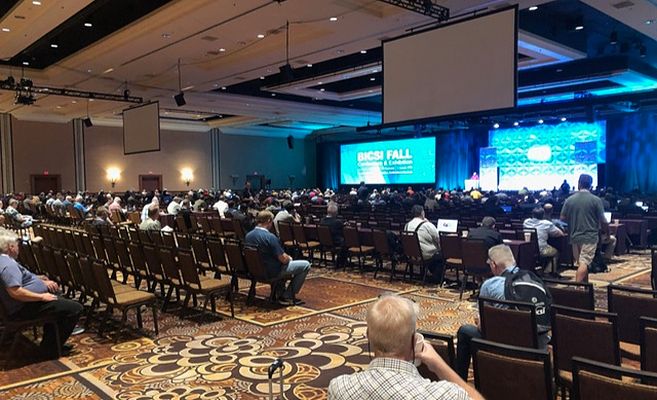
During BICSI, the Consortium also discussed how it will provide value to technology leaders and users across the building automation technology ecosystem as it:
- Takes steps to better understand the market need for single-pair networks
- Increases awareness and acceleration of single-pair Ethernet in building automation technology and networks
- Conducts research and consolidation of market analysis information
- Discusses the best way to build ecosystem support for single-pair Ethernet technologies
- Provides a collaborative forum where network and building automation technology leaders, including manufacturers, integrators, facilities managers and design/engineering professionals, can collaborate on using single-pair Ethernet
- Interprets the benefits of evolving standards and how they support interoperability and market growth
By rallying around a standards-based technology, the Single-Pair Ethernet Consortium believes that the IoT revolution will experience explosive growth and finally allow organizations to benefit from all IoT has to offer in terms of efficiency, automation and cost savings.
Getting Involved
Involvement in the Single-Pair Ethernet Consortium is open to any organization that’s interested in accelerating the acceptance of single-pair Ethernet technologies in building automation technology and networks. If this sounds like something you’d be interested in, post a comment below and I’ll tell you more about it.
Über den Autor
Ron Tellas
Senior Solution Architect, Enterprise Solutions, Belden
Ron Tellas ist Fachexperte für HF-Design und elektromagnetische Ausbreitung. Er hat sich Belden im Jahr 2016 angeschlossen, um mitzuhelfen, den Zeitplan für Technologien und Anwendungen im Bereich intelligente Gebäude mitzugestalten. Dank dieser Erfahrungen kann er heute sehr effektiv Systeme, Geräte und Verbindungstechnik in Netzwerklösungen integrieren. Ron Tellas vertritt Belden in mehreren Standardisierungsorganisationen, Ausschüssen des National Electrical Code und als Vorstandsmitglied der FMP Alliance. Er hat einen Master- und Bachelor-Abschluss in Elektrotechnik und einen Master-Abschluss in Betriebswirtschaftslehre erworben und hat 17 US-Patente angemeldet. Er ist stolzer Empfänger des 2024 Harry J. Pfister Award, einer Auszeichnung, die er für seine herausragenden und eindrucksvollen Beiträge zur Telekommunikationsbranche erhalten hat.